

SPORT PSYCHOLOGY

What sets the multiple gold medallist apart from the eternal 4th? Why does one athlete achieve sporting immortality while another gives up, crushed, even though there seems to be nothing to choose between them in talent and technique? Why, despite all prophecies of doom, did Roger Federer stay at the top of his game for so long, despite his age as a tennis player, and why doesn’t the world’s best golfer, Tiger Woods, hit a hole today?

“It is not more vacation we need – it is more vocation.”
– Eleanor Roosevelt
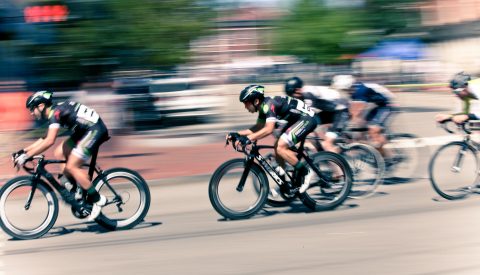
For the 21st-century athlete, training is a question of ever more precise physical and technical development, and with the dissemination of instruction online, it is possible for many more aspiring adolescent athletes to make the grade than in the past. So much so, in fact, that the purely physical skills of the professional athlete have become almost a given, and they now take second place to other factors in the search for real and sustainable sporting success. The essential foundation of every professional athlete rests on three equal pillars: the physical, the technical and the psychological. Training athletes in these three areas in equal measure is the best route to excellence and success with low risk of injury, and yet the psychological development of athletes is frequently neglected. With the help of the concept of Lucidity, Dirk de Sousa has developed a way to empower athletes psychologically to access their full potential at any time, through increased mental clarity and the cultivation of psychological distance from automatic emotional responses.
In this way, learning is accelerated while the risk of injury is minimized, enabling the athlete to perform at the peak of his or her potential in competition. As a former coach of three national and Olympic teams, Dirk de Sousa achieved successes that were sufficiently positive that he was invited to train national and regional coaches, and to develop new standards for national performance centres in Switzerland, the objective being to bring the concept of Lucidity to young athletes on a national scale. In addition, Dirk de Sousa has developed a test-based tool that identifies the current psychological status of athletes and provides coaches with a psychological inventory and follow-up tool. This is the first time that the psychological status of an athlete has been measured and objectively assessed, and it enables coaches to promote not only athletes’ optimal psychological state but also their mental well-being at every stage of their career.
“It is not more vacation we need – it is more vocation.”
– Eleanor Roosevelt

The LQ project aims to measure and increase self-insight through the concept of Lucidity. It promotes a new understanding of how the mind creates automatic responses and limiting identifications, and eliminates all that, psychologically, stands as an obstacle between you and your potential for real contentment and self-realization.
SUBSCRIBE TO THE NEWSLETTER